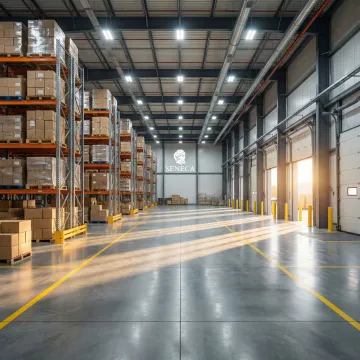
What is cost segregation and how does it apply to warehouses and distribution centers?
Cost segregation is an IRS-compliant tax strategy that reclassifies components of your warehouse such as loading docks, electrical systems, site improvements, dock levelers, and specialized lighting, from the standard 39-year depreciation schedule into 5-, 7-, or 15-year categories. This accelerates your deductions, reduces taxable income in the near term, and significantly improves your property's cash flow.
How much can a warehouse owner save with a cost segregation study?
Savings vary based on your property's cost basis and complexity, but Seneca's average client achieves a first-year deduction of $171,243. For large warehouse properties valued at $3M–$10M, typical first-year savings range from $200,000 to $400,000. ROI ratios regularly exceed 10:1, meaning for every dollar spent on the study, owners commonly recover $10–$25 in tax savings.
What warehouse components qualify for accelerated depreciation?
Common warehouse components eligible for reclassification include dock equipment and levelers, specialized lighting systems, electrical wiring for equipment, floor drains and plumbing for operations, security systems, fencing and signage, paving and parking areas, conveyor foundations, and certain HVAC systems. An engineering-based study identifies every qualifying asset specific to your facility's construction and use.
How long does a cost segregation study take for a warehouse?
Seneca completes most warehouse cost segregation studies within 2–4 weeks, significantly faster than the industry average of 4–8 weeks. If you have a tax filing deadline, our rush service can deliver a completed, fully engineered report in as little as one week. Virtual tours further accelerate timelines to 2–3 weeks with no disruption to your facility's daily operations.
Can I get a cost segregation study for a warehouse I purchased several years ago?
Yes. Our Lookback Cost Segregation Study allows you to recover missed depreciation deductions on warehouse properties placed in service up to 15 years ago. We use IRS Form 3115 to claim all missed deductions in a single tax year without filing amended returns. The process and deliverables are identical to a standard study, and if original records are unavailable, we reconstruct costs using industry databases.
What does the cost segregation study cost for a warehouse property?
Study fees scale with property size and complexity. For warehouse properties valued at $1M–$3M, study costs typically range from $10,000–$20,000. For larger facilities at $3M–$10M, fees range from $15,000–$30,000. Every engagement includes a free preliminary analysis and savings estimate so you can confirm the study is financially worthwhile before committing with ROI typically exceeding 10:1.
Does a cost segregation study on a warehouse increase audit risk?
Properly prepared, engineering-based cost segregation studies have a low audit risk profile because they adhere strictly to IRS guidelines and are supported by detailed documentation. Seneca further protects every client with our Seneca AuditDefense guarantee: if the IRS audits your study, we handle all communications, provide supporting documents, and defend the report at no additional charge for the entire duration of your property ownership.
Do I need to pause warehouse operations for the property inspection?
No. Seneca's virtual property tour option allows our engineers to conduct a complete component analysis of your warehouse or distribution center via video call in just 30–45 minutes, with zero disruption to your operations. Clients guide our team through the facility at their convenience, and we handle real-time identification, classification, and digital documentation of all qualifying building components remotely.